REQUEST A CONFIGURATION / PPS SERIES
Select the signal and installation you need.
PPS codes below identify inquiry families. The table defines what to review; it does not assign an unverified pressure, temperature or bandwidth rating to a supplied unit.
| Configuration request | Pressure / task | Electrical chain | Installation review | Next step |
|---|---|---|---|---|
| PPS-ICP-113 / PPS-ICP-102Flush dynamic piezoelectric | Dynamic excursion + static baseline, psi / bar / MPa | IEPE voltage; current, bias and headroom by configuration | Clamp/ground isolation, installed response and seal geometryPCB Piezotronics 113B / 102B | Request this family ↘ |
| PPS-PRZ-062 / PPS-PRZ-190Miniature DC + dynamic bridge | Absolute / gauge / differential reference explicitly selected | Bridge mV/V, excitation, gain and output swing | Exact thread pitch, front/reference-side response and mediumKulite XCQ / XTL; Endevco 8510B / 8530C | Request this family ↘ |
CDU / cooling-loop channel plan
| Need | Candidate route | Review input |
|---|---|---|
| Baseline and positive/negative transient | PPS-PRZ DC + dynamic bridge | Reference, operating line pressure, extrema and electrical headroom |
| Small fast fluctuation on a steady line | PPS-ICP or charge-mode dynamic chain | Sensitivity, static load, useful pulse duration and droop |
| Compare loop locations | Synchronized, independently qualified pressure channels | Port drawings, sensor positions, channel skew and common recorder |
01 / ENGINEERING NOTES
Describe the event without assuming its speed
Emerson’s data-center cooling guidance explicitly addresses pressure spikes and anti-water-hammer valve design in coolant loops. Valve switching, pump changes and quick-disconnect events should be described for the particular loop. Do not impose a universal microsecond requirement on every CDU: specify the smallest feature and error your validation needs.
02 / ENGINEERING NOTES
Range includes the baseline and negative excursion
Supply nominal pressure, maximum positive and minimum pressure, temperature and the pressure reference. The transducer and gain must retain headroom for the complete record. A negative gauge-pressure excursion and a physically meaningful absolute-pressure limit are different statements; keep the reference with every value.
03 / ENGINEERING NOTES
Check coolant and installation as one assembly
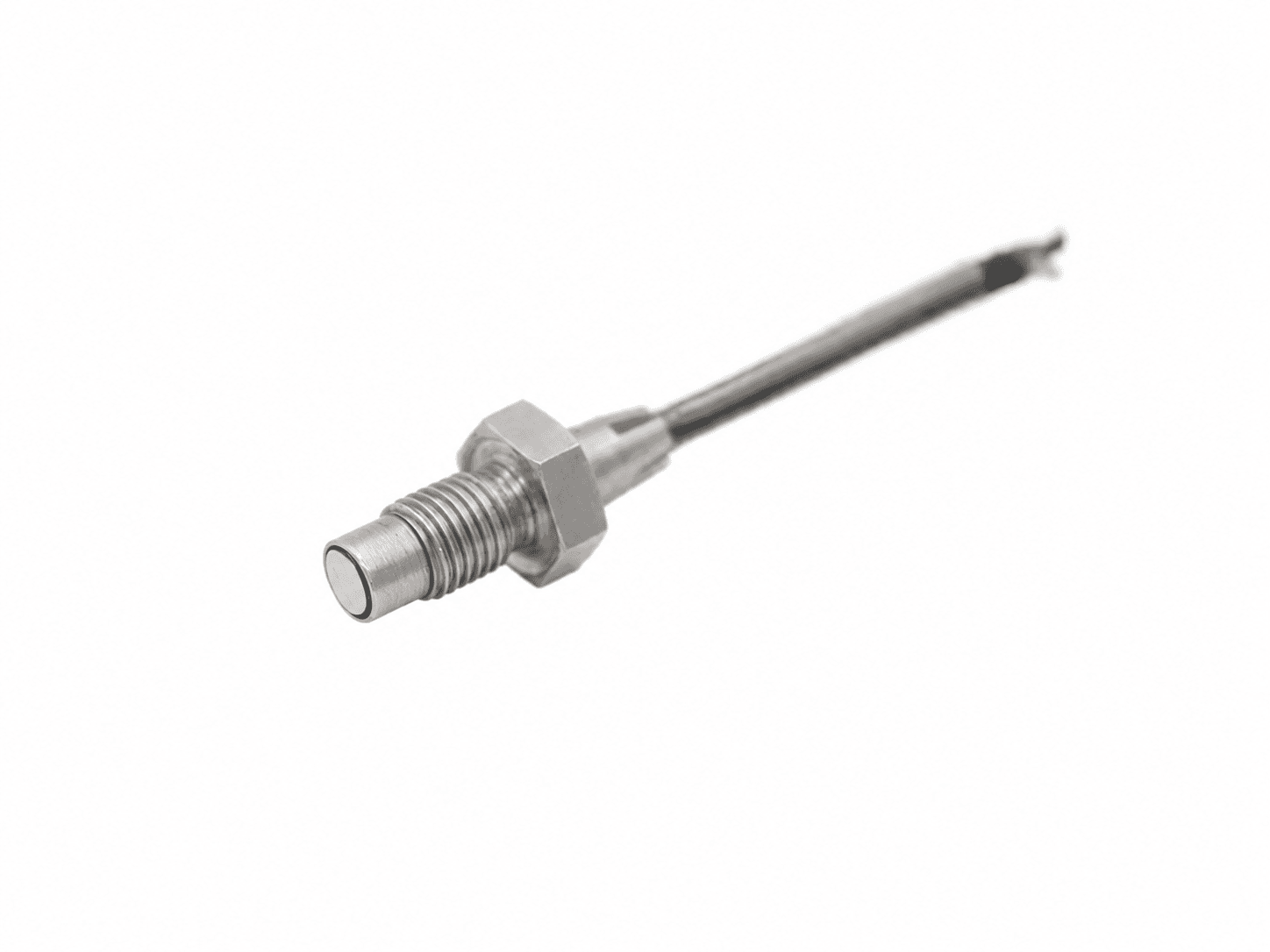
Identify water/glycol concentration or other coolant, additives and operating temperature. Diaphragm, seals and wetted adapters require compatible materials. A threaded miniature sensor may have a recessed diaphragm when installed in a pipe adapter; inspect the actual sensing-face location and residual passage.
- Attach the port and seal drawing rather than only the nominal pipe thread.
- Specify allowable leak and pressure-containment acceptance.
- Review any isolator, tube or protective diaphragm for its effect on the event response.
04 / ENGINEERING NOTES
Include conditioning and a reproducible acceptance record
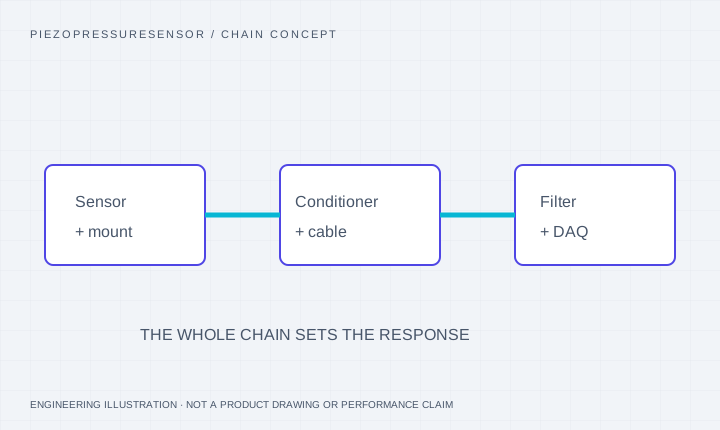
A connector labeled BNC does not establish IEPE power, bridge excitation or usable bandwidth. Quote the appropriate conditioner, gain, filtering, acquisition range and timing with the sensor. Record installed configuration and calibration scope so measured peaks can be compared across loop revisions.
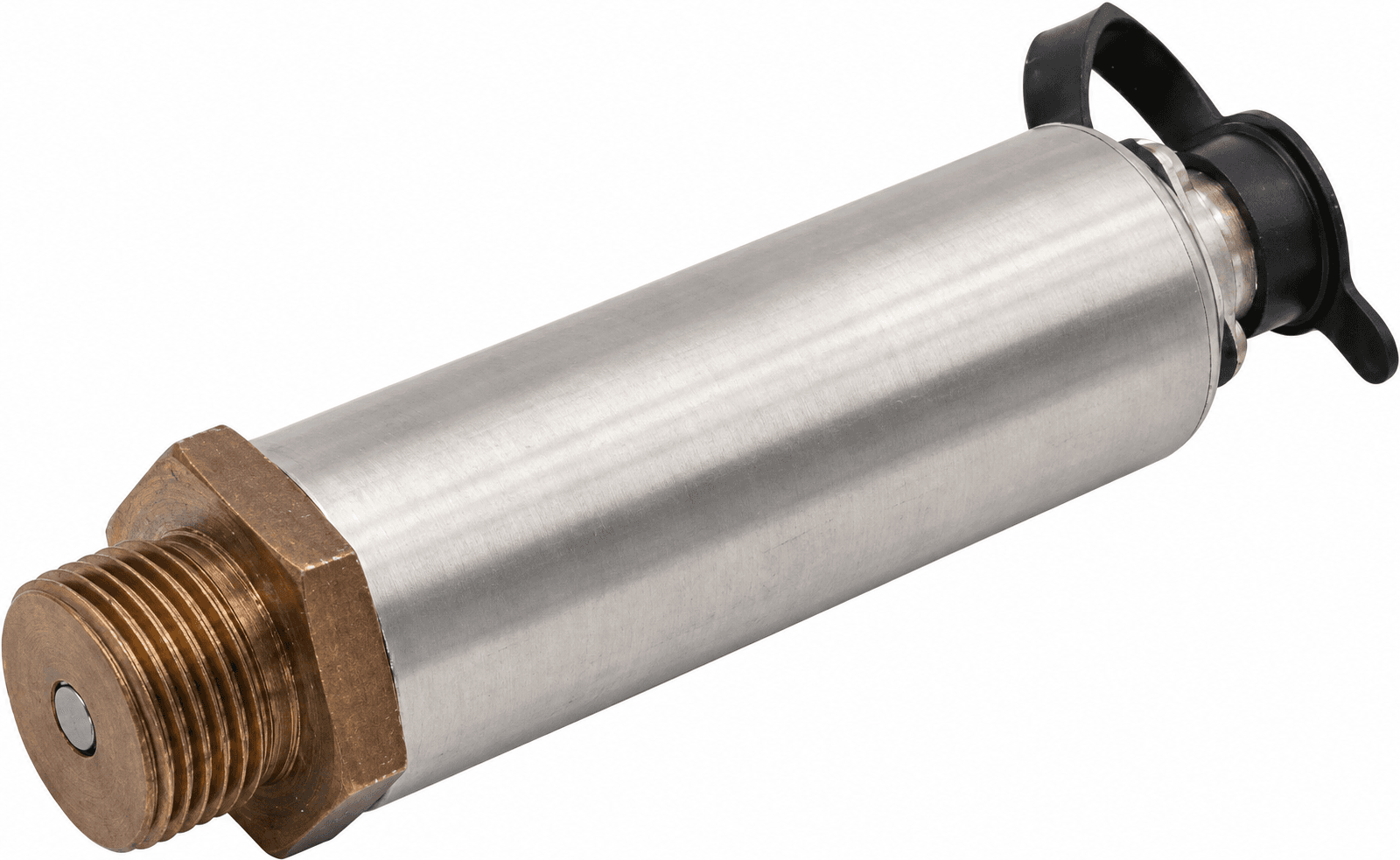
Source photographs and renderings identify the stated arrangements. Range, medium, output, installation and measured response must match the offered configuration. See each caption for its sensing principle.
SOURCE-DOCUMENTED HARDWARE REFERENCES
Review the package and its sensing principle.
These supplier-reference images show the indicated arrangements. Final pressure, medium, dimensional and response requirements are confirmed for the proposed configuration.
Pressure-chain questions for this configuration
Does every liquid-cooling loop need a sub-microsecond sensor?
No. Required response follows from the event and the permitted measurement error. Define the useful time scale before selecting bandwidth.
Is a sensor rated for water automatically compatible with the coolant?
No. Concentration, additives, temperature and every wetted material in the assembly need review.
Sources and scope of the comparison
- PCB Piezotronics: pressure-sensing principles and installation
- NIST: pressure-tubing amplitude and phase response
- Emerson / ASCO: data-center liquid cooling and pressure-spike context
Original-model facts and general methods describe their named sources. They do not qualify a PPS unit or imply manufacturer affiliation.